
Newborn Screening Awareness Month
(Hover over – or tap on – each state to see how many diseases are included on their NBS tests)
September is Newborn Screening Awareness month so we will be providing information throughout the month about Newborn Screening (NBS).
Here’s a brief introduction:
Newborn Screening is a crucial component of ensuring the health of all newborns, yet many parents have no idea what is being done when the test happens.
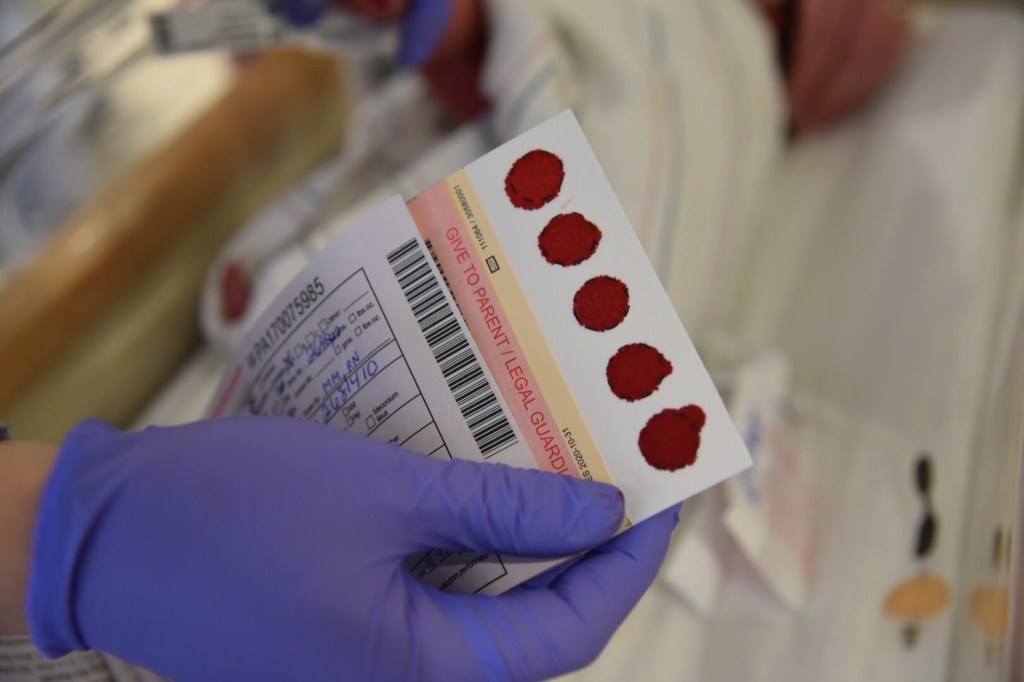
Newborn Screening (NBS) happens between 24-48 hours of birth and it involves the pricking of the baby’s heel in order to apply blood to special paper (filter paper). The blood is used to test for treatable conditions – conditions for which timing is everything.
Did you know that each state screens for a different number of diseases?
I created the interactive map above to visually demonstrate the discrepancy from state to state, or you can see the chart below. I obtained all of this data from babysfirsttest.org on August 31, 2019.
| State Name | Number of Diseases Screened |
| Alabama | 46 |
| Alaska | 53 |
| Arizona | 31 |
| Arkansas | 32 |
| California | 63 |
| Colorado | 44 |
| Connecticut | 65 |
| Delaware | 52 |
| District of Columbia | 62 |
| Florida | 55 |
| Georgia | 32 |
| Hawaii | 49 |
| Idaho | 48 |
| Illinois | 64 |
| Indiana | 49 |
| Iowa | 53 |
| Kansas | 31 |
| Kentucky | 58 |
| Louisiana | 34 |
| Maine | 55 |
| Maryland | 61 |
| Massachusetts | 66 |
| Michigan | 59 |
| Minnesota | 61 |
| Mississippi | 61 |
| Missouri | 60 |
| Montana | 32 |
| Nebraska | 37 |
| Nevada | 57 |
| New Hampshire | 39 |
| New Jersey | 57 |
| New Mexico | 49 |
| New York | 60 |
| North Carolina | 37 |
| North Dakota | 52 |
| Ohio | 46 |
| Oklahoma | 54 |
| Oregon | 53 |
| Pennsylvania | 38 |
| Rhode Island | 34 |
| South Carolina | 55 |
| South Dakota | 50 |
| Tennessee | 70 |
| Texas | 55 |
| Utah | 52 |
| Vermont | 35 |
| Virginia | 33 |
| Washington | 34 |
| West Virginia | 38 |
| Wisconsin | 47 |
| Wyoming | 52 |
According to BabysFirstTest.org there are 80 treatable conditions that could be screened for at birth, but no state screens for all 80. Visit their site to learn more about what diseases are included on your state’s NBS.
This means that your ZIP code determines life or death if you are born with one of these screenable/treatable diseases.
Where you live should not decide whether you live or whether you die. – U2
There is a national panel called the Recommended Uniform Screening Panel, or the RUSP, and there are currently 35 diseases on the RUSP. Many states screen for all of these diseases but not all.
As you can see, there’s a lot of work to be done in the realm of Newborn Screening to ensure that every child is screened equally for all diseases, including Krabbe. One thing you can do is contact your legislators to ask them to take NBS seriously and work on increasing your state’s screening panel.
Comment below with any questions, comments, etc. Do you remember when your child was screened? Did you know what was happening?
September is Krabbe Awareness Month
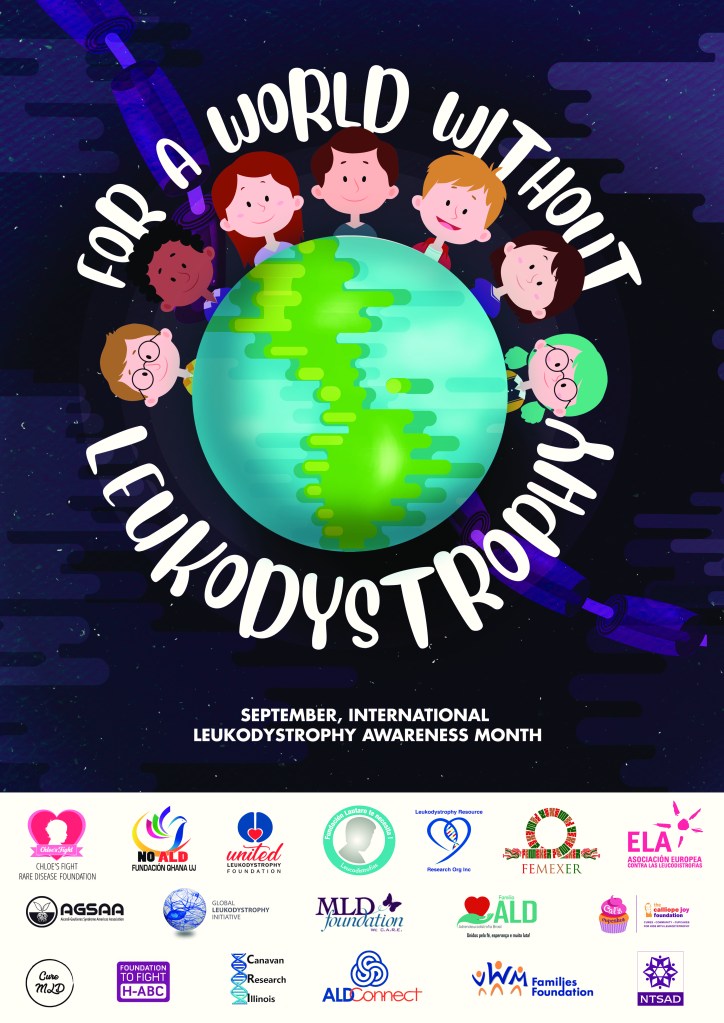
Each day in the month of September you will be seeing a new image with facts about Krabbe/Leukodystrophies as we do our part to increase awareness about these diseases.
Please share these posts/images on social media using the hashtag #MakeKrabbeKnown
September is also Newborn Screening Awareness Month, so we will be posting about that as well.
Feel free to ask any questions you have! We’d be happy to answer.
So much gratitude to our friend Mike of ArtisticDork.com for making these images and for being willing to make updates and changes for years now. If you are in need of graphic design work, please check out his website!
Let’s #MakeKrabbeKnown because #WhiteMatterMatters ❤
We Have Time
Our boys are sixteen months old now. They walk everywhere, they love being outside, and they love experiencing new things.

Most of the time I feel as though we have struck a great balance between being home and going out to do things, but some days I feel this pressure to do everything. If I find out we have to miss some event or function, I feel like they are missing out. I feel pressure.
This isn’t a pressure induced by social media, however. Yesterday I realized that it’s because all I’ve ever known as a parent is limited time. A deadline. A looming end point and the danger of permanent regret.
With Tori, we had less than two years to try to give her all the experiences we could manage. Krabbe robbed us of time. Krabbe made us feel rushed. We did things she was far too young to appreciate because there was pressure. We didn’t have time to waste. We didn’t want to have any regrets for her, or for us as a family. And, thankfully, we don’t.
Yet, I have to stop and remember that, Lord willing, we have time with the twins. We don’t have to do everything right now, and we don’t have to be disappointed if we don’t take them everywhere to do it all at this age. They don’t know what they’re missing, and if they are happy, that is all that matters. We have the freedom to wait until they can better appreciate whatever it is we want them to see/experience.
I’m praying that my heart can rest in that hopeful knowledge, that I can be better at just taking one day at a time, one moment at a time, and providing the boys with a well-balanced life. Rest is equally as important as stimulation and experiences, and I pray that we as parents will have the wisdom to do what is best.
I’m so thankful for this gift of time.

More Than Just a Stove
On December 25, 1989 I was given a handmade stove from my great-grandparents. I would be turning seven the following week and loved to pretend to cook, so my wonderful … Continue reading More Than Just a Stove
How We Make Small Spaces Work With Toddlers
 You may remember that our home is currently split into two separate apartments. We currently occupy the first floor and the basement; while someday we hope to make it back into one house and utilize all of the space for our family, for now we make it work and I think we do it fairly well.
It takes creativity to have four people live in approximately 700 sq. ft. (plus the basement), and it takes some time to figure out the best way to arrange things. We’ve been here 2.5 years and I’m still always thinking of new/better furniture arrangements. 🙂 Everything must be multi-functional in order to live comfortably.

One of the things we (by we, I mean my dad) did to make the living room (which had been split in half with a wall and a door to create a bedroom) more functional was to put in french doors. In the future, it can just be part of the living room/an office and not a bedroom, but it is currently the boys’ bedroom.
Until last weekend, the living room was also their playroom (which is fine, as we do not believe children should be confined to a separate space – this is their home, too, plus, how?).
We wanted to make better use of our available space so we took down the huge crib (where Caleb had been sleeping) and added another Pack-n-Play (with a good mattress, like Isaiah has been using).
This allowed us to move their play area into their room and make it an even better living situation for us all!


We also have a reading station and a music station in the living room, as well as other bigger toys (currently these tunnels) for them to enjoy.


They carry their toys from room to room and it’s never this clean (I quickly tidied up to be able to take a decent picture!), but that’s okay. We wanted them to feel free to have fun and to play wherever they want, safely. Toddler life is not a tidy life, and I wouldn’t have it any other way.
While it isn’t always easy to live in a small space, it is possible, and it is worth it. It’s saving us money, helping us become debt-free, and it’s forcing us to be thoughtful about using every inch wisely. And there’s less space to clean 😉

Five
Today is Tori’s fifth birthday. It’s the fourth one we’ve celebrated without her in our presence, but, for some reason, this one caught me off guard and hit me harder … Continue reading Five
Why Intent Matters
Disclaimer: As always, I do not write this as someone who has it all together – I write as someone trying to figure it all out.
I’ve come to recognize the importance of intent when considering conflict and a hopeful resolution. Whether the conflict happens in the workplace, in friendship, in family, in the Church, or in marriage, I believe it’s important to always assume the best and seek true understanding of the heart behind the words/actions.
We are quick to expect grace but hesitant to offer it.
I’ve written before about the current situation in which I find myself because of words that were misinterpreted and actions that were made mistakenly. “Mistakenly” is the key word. My intent was never to hurt this person. One of the mistakes I made was truly done innocently, and the other was misinterpreted because of the previous mistake. It didn’t help that these two mistakes were made within the same month.
Both times my heart was in the right place, but this person seemingly refuses to consider that. I understand – and acknowledged – that I caused hurt, but I also understand that it is all a misunderstanding and have sought forgiveness and grace to no avail. I’ve given up trying to explain/prove that my intentions were good and instead have chosen to give this person space. However, all of this has caused me to spend a great deal of time researching/contemplating intent and motive, both biblically and in general, both as an offender and the one offended.
Intention: an act or instance of determining mentally upon some action or result. The end or object intended; purpose.
Motive: something that causes a person to act in a certain way, do a certain thing, etc.; incentive. The goal or object of a person’s actions.
I posed a multi-level question on my Facebook page and loved the responses that I received. Here is the question: “How often do you consider intent/motives when someone has (intentionally or unintentionally) wronged/hurt you? Do you do this before you respond, or after? Do you think that intent is more important than what was done?”
And here are a few of the responses:
“I have these conversations with myself all the time when someone has done something to hurt me. I ask myself, “what is the likelihood that it was their intent to be hurtful or insensitive?” This doesn’t mean the issue is never brought up, but it does provide context that enables me to see things more clearly. One of the best pieces of advice i ever got was to assume the best about people until they prove you wrong.” – Becky
“This is a huge challenge for me. I’m married to an Enneagram 1, so I have to remember his intent is always for the greater good, but as an Enneagram 4, I’m always “But my FEELINGS!!!” and he’s always reminding me of his intent even if his message is received otherwise.” – Shannon
“Not as often as I should. My tendency is to feel first, act, then think. I am working on being more intentional about thinking about the feeling before I act on it, for this reason.” – Mikayla
“I really have struggled with this. I naturally lean towards adding in my interpretation of their actions. I’m working hard on taking people at face value.” – Alexis
“As I get older (and ideally more spiritually mature) I try to consider motives. Usually I’m better at considering them afterwards but I try to always respond in a controlled manner. I’m not always successful at this. It also depends on how close of a relationship I have with someone who has hurt me. This determines how far I’ll go to try to mediate vs just forget about it.” – Michelle
“I try and consider intent because the intent may have been poorly received by me because I misunderstood. My misunderstanding doesn’t mean they intentionally wronged me. This takes me time to arrive here because I can be quick to respond to my hurt. It’s a learning process.” – Johanna
“I think there’s always a backstory that we don’t know.” – Carla
“I think offense can be a choice, even if someone is being intentional, I can still decide to not be offended….heaping coals or perhaps, ‘let it go’. Definitely easier said than done but brings a lot of freedom when possible.” – Christa
“I find that the more spiritually fit I am, the less anyone or anything affects me. If I am restless, irritable or discontented, there’s something wrong in my spirit.” – Connie
“Intentions are always worth considering but impact really matters more than intentions. We need to own our responsibility for hurtful impact even when our intentions were not hurtful.” – Sarah
“I have come to see just how much communication improves when I take responsibility to make sure my noble intent is clear to the person I’m trying to communicate with.” – Lyndsey
“I am loving the opportunity to teach my children about perspective. About owning the mistakes we make and showing grace and understanding when things happen to us.” – Meredith
“As for the finding out that it was unintentional, it usually makes it easier to heal, unless their attitude about it is a “so what if it hurt you, I don’t care because I didn’t mean it that way” but then the hurt gravitates towards their lack of care rather than what they actually did first.” – Valerie
“Intent has the ability to change EVERYTHING.” – Amanda
“Always only afterward in retrospect. I strive to see the good in other people and I can be really naive about it. That’s not to say I’m a saint but I’ll often question myself and my motives before somebody else’s.” – Melissa
“Intention is everything. I will NEVER hold someone accountable when the consequences are not tied to the intent. However, if there is intent there, my reaction will be a bit different.” – Josh
“I don’t know that there’s one right answer. Intent certainly can be more important, but not always. Every situation is different.” – Bethany
“Intent is so important. Doesn’t mean it doesn’t hurt (whatever it is) but seeing things from another’s perspective is key to healing and ultimately growth.” – Angie
“I think assuming the best of someone is wise in order to further maintain relationships. But, we learn in infanthood to trust/mistrust people according to Eric Erickson so it can be hard to 1) realize we mistrust others and 2) to endeavor to do better and 3) recognize when we aren’t and change our thought patterns in the moment.” – Danielle
Context is one of my favorite things in life. It’s one of my top StrengthsFinder strengths; it’s why I love history, why I love learning people’s stories. Context brings understanding and grace, because a person’s actions often don’t tell the entire story.
Biblically speaking, Peter is a perfect example. Peter had great intentions to follow Jesus but often fell flat on his face because he didn’t execute those intentions well. He had the faith to get out of the boat and walk on the water, but he also lost sight of Jesus in the midst of the wind and the waves and began to sink. What did he do? He called out to Jesus for help. His heart never wavered. He may have failed in the moment but his intentions were good and true. He’s the one Jesus chose to be the foundation of the Church (Matthew 16:18) and I think that’s telling. God doesn’t expect perfection – He expects obedience and faith.
More than once in Scripture we are told that the Lord knows our hearts. One of my favorite verses on this topic is this:
But the Lord said to Samuel, “Don’t judge by his appearance or height, for I have rejected him. The Lord doesn’t see things the way you see them. People judge by outward appearance, but the Lord looks at the heart.” – 1 Samuel 16:7
If God looks at the heart, shouldn’t we?
“We tend to get what we look for. If we look for the worst in people, we’ll get bucketloads of it. If we look for the best, we’ll get that.” – Karl Vaters
We all have past hurts that have shaped our view of people and of the world. It’s easy to assume that just because someone in our past intentionally hurt us that anything anyone does is also to inflict pain. But is that fair? Is that the best way to approach relationships?
This is already too long, so here are some resources I found if you want to read more.
Intent and motive are explored in several Bible passages:
Numbers 14: 40-44 (When the Israelites realized the consequences of their actions, they repented but the Lord knew their hearts and the reason behind their actions.)
Joshua 22:11-34 (Great example of not assuming that intentions are bad.)
1 Chronicles 19:2-3 (Our past experiences can make us overly suspicious of others. We should not assume that every action is meant for harm.)
From a corporate standpoint, this is an excellent article. Here’s a quote from it:
“When we make mistakes, we often blame the circumstances of the situation rather than take responsibility for the mistake. When other people make mistakes, we tend to over-emphasize the other person’s role in that mistake–we very quickly blame them!”
Here are some other articles I found on this subject:
https://www.christianpost.com/news/why-god-is-looking-at-your-heart.html
https://www.christianitytoday.com/karl-vaters/2017/july/fellow-christian-assume-best.html
After all of this reading, discussion, and contemplation, I still believe that when we are wronged, we need to take the intent of the person into consideration. That doesn’t erase the hurt (and we must own our mistakes), but it can lessen it once we realize that they made a mistake. We ALL make mistakes. We are ALL imperfect. We ALL have backstories. We ALL do and say things we regret because we are sinful humans. Bottom line: We cannot hold others to an impossible standard that we ourselves could never attain.
As Christians, we are to offer abundant grace and forgiveness because WE have been forgiven abundantly by our Lord and Savior. Who are we to harbor unforgiveness? I am not preaching here – I am well aware I am prone to hold on to resentment and it’s something I struggle with on a daily basis. That’s why I’m so thankful that God has given us His Word to remind us of the standard to which we are called:
“Don’t just pretend to love others. Really love them. Hate what is wrong. Hold tightly to what is good. Love each other with genuine affection, and take delight in honoring each other. Never be lazy, but work hard and serve the Lord enthusiastically. Rejoice in our confident hope. Be patient in trouble, and keep on praying. When God’s people are in need, be ready to help them. Always be eager to practice hospitality.
Bless those who persecute you. Don’t curse them; pray that God will bless them. Be happy with those who are happy, and weep with those who weep. Live in harmony with each other. Don’t be too proud to enjoy the company of ordinary people. And don’t think you know it all!
Never pay back evil with more evil. Do things in such a way that everyone can see you are honorable. Do all that you can to live in peace with everyone.” – Romans 12:9-18
“Love is patient and kind. Love is not jealous or boastful or proud or rude. It does not demand its own way. It is not irritable, and it keeps no record of being wronged. It does not rejoice about injustice but rejoices whenever the truth wins out. Love never gives up, never loses faith, is always hopeful, and endures through every circumstance.” – 1 Corinthians 13: 4-7
“Instead, be kind to each other, tenderhearted, forgiving one another, just as God through Christ has forgiven you.” – Ephesians 4:32
“Make allowance for each other’s faults, and forgive anyone who offends you. Remember, the Lord forgave you, so you must forgive others.” – Colossians 3:13
The next time someone “wrongs” me I pray that I can take their intent into consideration before I respond. Was it truly done maliciously? Were they actually trying to harm me in some fashion? Has their track record really been one of causing hurt? Or am I taking things too personally/the wrong way? Because intent matters.
Considering intent can make it far easier to offer abundant grace and forgiveness instead of being on the defensive and choosing anger and hurt. One path leads to stronger relationships; the other leads to resentment and loss. Which do we want more?
Questions for discussion and contemplation: When someone’s intentions and motive are pure, yet hurt occurs, what role should grace play? When the offender is remorseful and expresses that their intent was indeed pure and good, how should the one offended respond?

Isaiah and Caleb’s Adventure List: Build-A-Bear
When we started to create a “bucket list” for Tori, we knew time was short. We knew we had to cram as much into her limited days on earth as … Continue reading Isaiah and Caleb’s Adventure List: Build-A-Bear
Trends (Others Telling You What to Do)
I have never been a fan of trends. In high school I even stopped wearing orange – which I loved – because it became trendy. I didn’t want to do something just because everyone else was doing it.
Ultimately, I’m a rebel at heart who doesn’t like being told what to do, say, or think. As a “good Christian girl” I never rebelled in the traditional sense, but I’ve found little ways to rebel whenever possible to satisfy that need. 😉
So, when I got this email yesterday I rolled my eyes:

The haircut trends You NEED to know for summer. Yes, because you NEED to know what celebrities think about hair and what you should do with yours.
Why? Why do so many in our culture let someone else dictate what they should do with their hair? What they should wear? Why do you want to be like everyone else?
I know this sounds like a rant, but it isn’t. I promise. I’m just thinking out loud and encouraging you to join in to discuss in the comments!
I simply do not understand why people follow trends set by the fashion industry/celebrities/strangers. In reality, you’re allowing someone else to control you, and your wallet. And all for what? To feel good about yourself? To feel like you “fit in” (even though, honestly, people aren’t thinking that much about what you’re wearing)?
You wouldn’t worry so much about what others think of you if you realized how seldom they do.” – Eleanor Roosevelt
By telling you what you “should” be wearing and doing, the fashion industry is encouraging you to constantly give them your money. They make you think that you always need something new because your current wardrobe is outdated, everyone is judging your lack of trendiness, and therefore your perfectly good clothes are not worth wearing. And that’s why they make millions.
I wear clothes that are totally not trendy, but I don’t care. They are comfortable and in good condition. I buy new things occasionally, but I choose to spend our hard-earned money in other ways. Essentially, I refuse to be told what to do and what to buy, especially by people I don’t even know.
Are you a trend-follower? I’d genuinely love to dialogue about this in order to try to understand your perspective! Let’s discuss!
 Even So, Joy