
It’s been a heavy few days in our home.
For months now, off and on, Isaiah has been asking to talk to baby Tori. To call her. To see her. And when we said we couldn’t, he’d ask to do it tomorrow.
And her birthday yesterday reignited his curiosity.
Ever since the Hunter’s Hope Symposium, he has been asking daily about where she is.
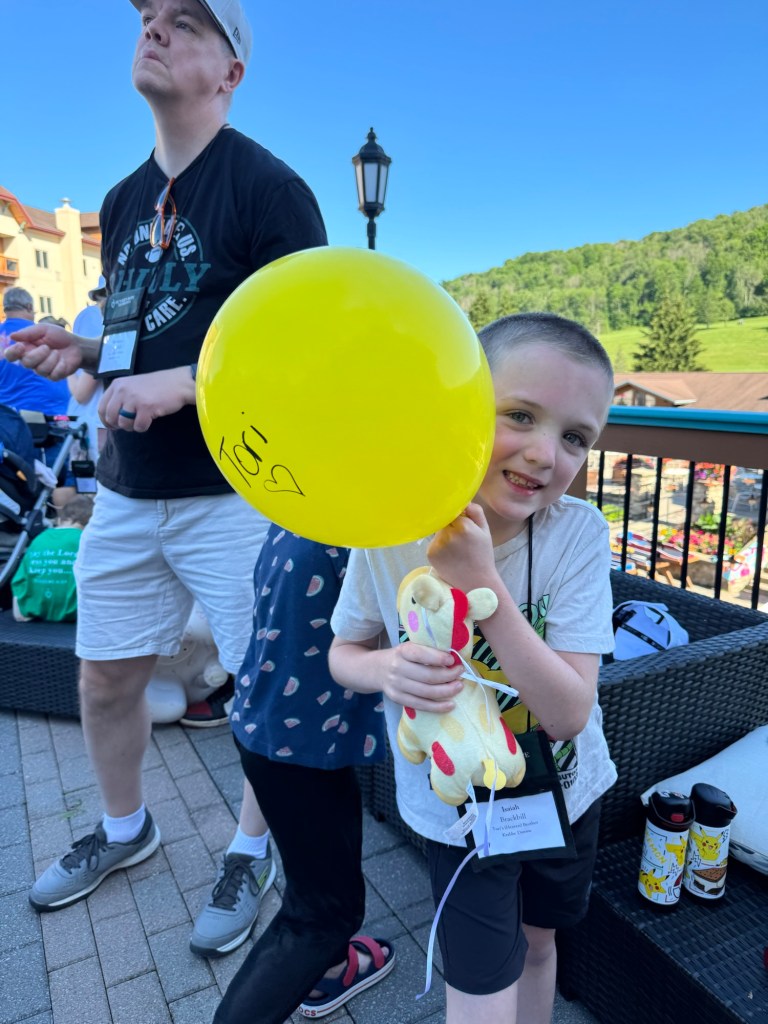
(Caleb asks, too, but not as often as Isaiah).
He knows she was sick. He’d ask if she was at the hospital, and when we’d say no, it was obvious by looking at his eyes that we couldn’t prolong the inevitable any longer.
So, after he asked multiple times today alone, we decided to take them to see her grave.

We don’t go there often – it has been years, actually. But tonight it was apparent that they were ready to learn a little more about death and dying.
We read some books that explained death in an age-appropriate way; we repeated what we said to ensure understanding.

And then we got in the car to go see where she is. ❤️


All of this is heavy because it’s our life, it’s our grief and trauma.
But it’s also heavy because of the work left to be done in rare disease.
No parent should have to bury their child, especially when something could have been done to prevent it (Newborn Screening).
No parent should have to live with this grief. And yet, that is the reality for so many parents of children with rare diseases.
Without NIH funding, fewer rare disease treatments are developed. And children continue to die.
Without treatments, there cannot be Newborn Screening. And children continue to die.
And without an evidence-based process to add conditions for which there are treatments, children will continue to die.
This is why I advocate.
Newborn Screening is a social justice issue, and it’s one I will never not be passionate about because I understand the gravity of it all.
We will continue to answer their questions. We will keep talking about Tori. But I deeply wish this weren’t our reality.
And I will keep working to make sure it’s the reality for fewer and fewer families.
 Even So, Joy