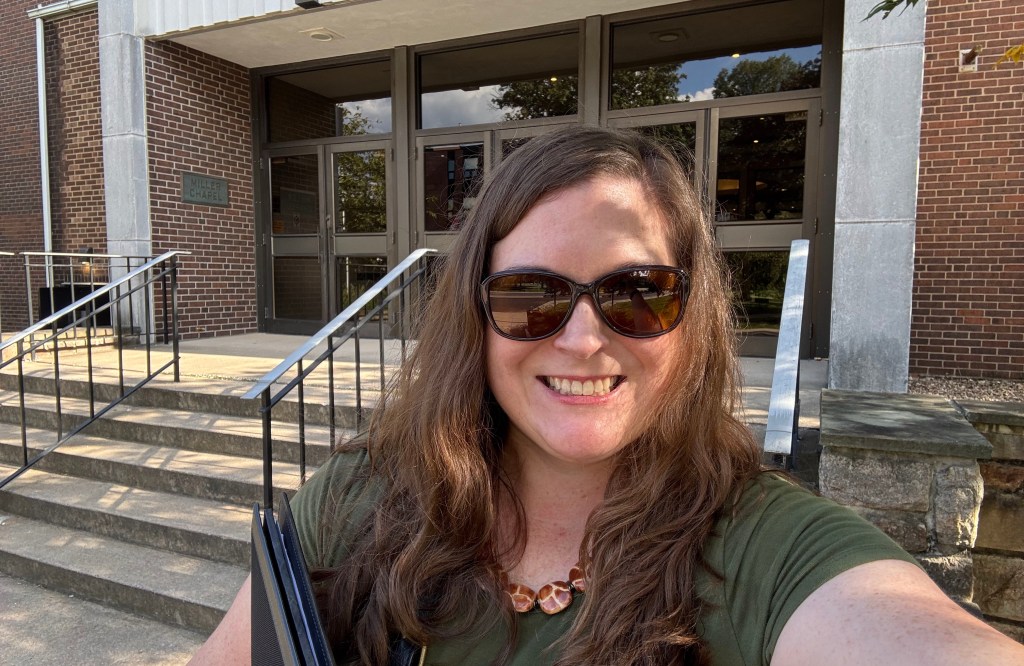
It was an honor to speak to the new class of graduate students in the Speech-Language Pathology Program at Lebanon Valley College today.
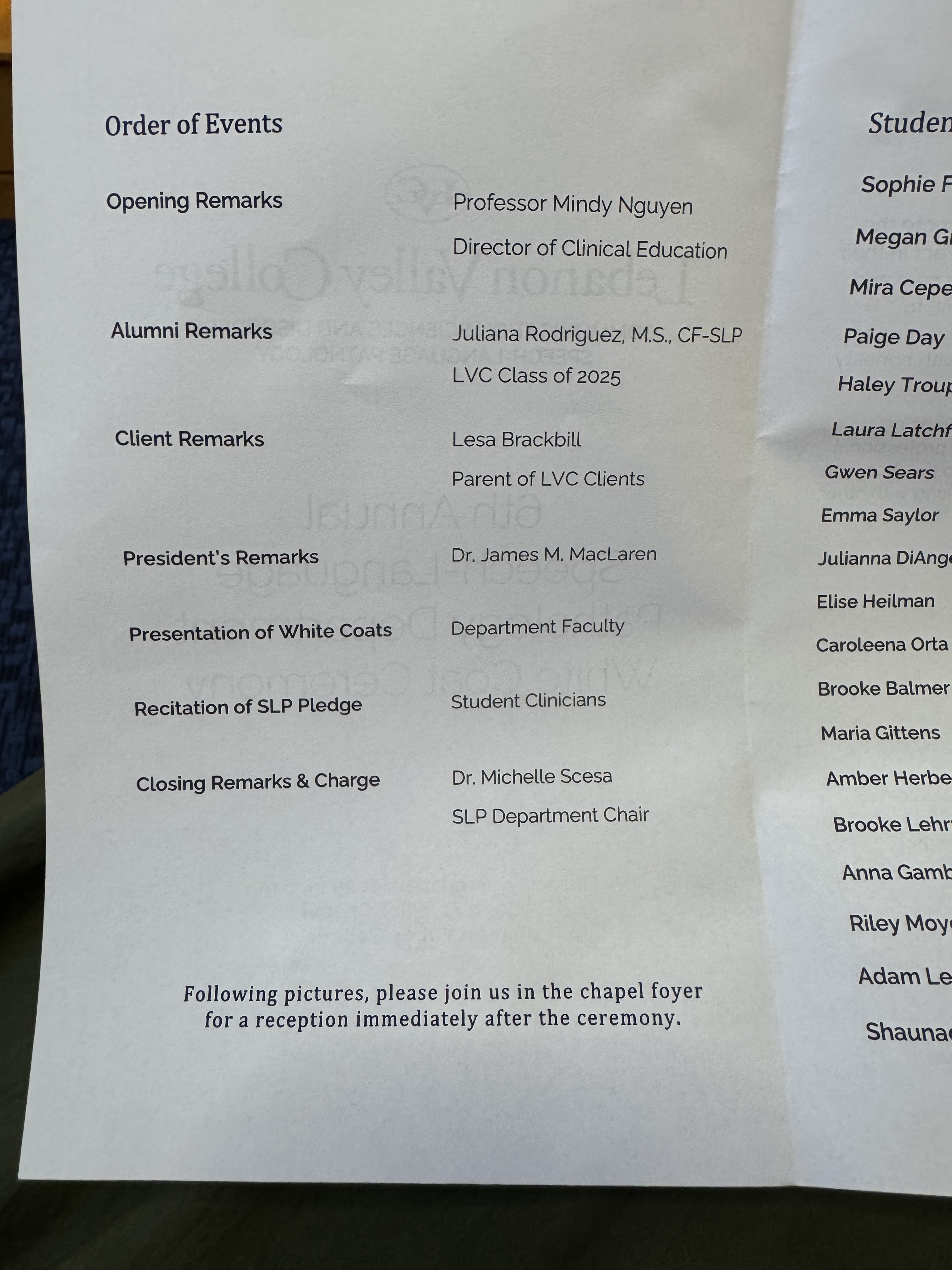


This is the first time I have spoken about the boys, so I spent quite a bit of time on this speech and am truly proud of it. I hope they were encouraged by my words.
The video and the written script are below (I made a few changes in the moment, but nothing substantial).
I want to thank you for the opportunity to share our family’s story with you all today. To understand our journey with speech therapy and hearing loss, you first need to hear about our first child, a daughter named Victoria, because that chapter of our lives shaped those that follow.
Eleven years ago, we welcomed Victoria into our lives. She had big eyes, lots of hair, and brought so much joy. But when she was five months old, everything changed. We knew something was terribly wrong. On February 13th, 2015, we were told that our six-month-old daughter was dying—words no parent should ever have to hear. She had Krabbe disease, a rare, terminal genetic condition. The neurologist told us that if we had caught it at birth, we could have treated it. At that time, only two states included Krabbe disease in their newborn screening panels.
Tori died in March 2016 at twenty months of age. After that, I spent five years working on three different bills to change the newborn screening laws in Pennsylvania and saw success with Act 133 of 2020. As a result of my advocacy with the NBS advisory board, we began screening for Krabbe disease in May 2021. Sixty-seven days later, identical twins were born in Erie, and a week after that, they were diagnosed with Krabbe disease because of newborn screening. Because of Tori. And the best part is that they were born on her birthday. That is the power of advocacy and the redemption it brings to our most challenging circumstances. Helping prevent others from enduring the pain and loss we experienced is the least I can do as part of Tori’s legacy. It’s why I continue to work in the newborn screening space and mentor others.
Today, I’m not here to talk about Victoria—I do that often enough as part of my job. But it’s because of our great loss that I advocate tirelessly for both her legacy and now for our twin boys, who have moderate to severe hearing loss. The lessons I learned from fighting for Tori’s life and legacy taught me how to fight for theirs. And I won’t be afraid to change a law for them either.
But I had hoped I wouldn’t have to.
When they were born, they were healthy. They passed all of their newborn screenings—blood spot, hearing, and heart. I held my breath until they outlived Tori, and it was then that I truly felt like things were going to be okay. COVID came around that same time, and my husband, Brennan, was furloughed for 94 days. Honestly, it was a relief. We had almost two-year-old twins, and I needed the help. Because we were isolated, we had no way of knowing that perhaps our boys’ speech had plateaued. However, seeing children of similar ages on social media made me begin to wonder.
A year later, at their three-year well-check, I mentioned to the pediatrician that I thought they were behind in speech development. They talked, but it wasn’t what I expected from three-year-olds. She brushed me off, saying it was because of the pandemic, because they were twins, and so on. I didn’t want to accept that, but I also didn’t want to seem like the paranoid mom, so I let it go. A year later, I said the same thing, and she said they’d catch up in preschool. I raised my eyebrows but thought maybe she was right.
She wasn’t.
They were kicked out of preschool on the first day because they weren’t listening and weren’t sitting down in a circle when asked to do so. That day, the director told me something was wrong with my children and suggested we seek an evaluation.
I did not handle that well, which I know now is a result of PTSD.
But we did as she suggested. We got on the waiting list for the IU; thanks to teacher-friends of ours, we learned about LVC’s clinic, and began attending a weekly “inclusion time” hosted by the Western PA School for the Deaf in Hershey, not yet realizing that they belonged there.
Until we came to LVC, no one suggested that their hearing be evaluated.
We went for autism evaluations just before their fifth birthday. The doctor said it was borderline, but because of their speech delay and not responding to their names, she’d give them a Level 1 autism diagnosis to help them get access to therapies. The autism diagnosis was also a profound shock. I know now that I have PTSD from Tori’s diagnosis day, but I didn’t realize it until the boys received their diagnoses.
I didn’t want our boys to have a disability; I didn’t want them to have challenges. And after all we had lost, I didn’t want to have another rough parenting journey. It took me some time to discover that I was depressed, that I had PTSD, and yet, that I could indeed be the parent and advocate they needed me to be, which currently means running for school board to do what I can to protect access to essential services, such as speech therapy. My life’s chapters include a political science degree and a Masters in Strategic Communication, and I intend to use both to make an impact.
We didn’t know they couldn’t fully hear when we first started attending LVC for speech therapy. It has only been a year and a half since we learned about their hearing loss, thanks to kindergarten screenings. The piece of paper that came home in their backpacks started a new kind of advocacy for me. This wasn’t fighting for policy change now; it was fighting for access. For tools. For what my children needed to thrive. It took ten months from the time they failed the screening until they both had hearing aids. Ten months.
They won’t wear them, but that’s not the most important part of this story.
Now we have answers. We know their hearing loss is genetic. It may be progressive. We can keep an eye out for clinical trials to help them. We can equip them with various communication tools so that they feel empowered to speak up for themselves. They are extremely intelligent (and have already switched places in school), and we have no doubts that they will live amazing lives and someday reach their potential.
As parents, we feel more confident about parenting our precious boys, despite the challenges it brings to have twins with hearing loss, but we didn’t get to this place on our own.
If it weren’t for the gentle guidance of your wonderful professors and the patience of the eager students who worked with our boys, we wouldn’t be where we are today, both in terms of their language development and our mental health. They never made me feel like I was a mess or that I was too much. They listened, they educated, and they provided options instead of leaving me with a blank page.
When parents bring their children here, remember that they all have a story. They all carry burdens they may never share. They may not handle things well at first, just like me, but with your gentle encouragement, they might eventually. You are making an appearance in a chapter of their lives, and taking the entire book into consideration matters.
It’s also important to consider that parents of children with special needs not only have to learn to parent differently, but they also have to learn to navigate a system that puts up barriers at every turn. All a parent wants is to give their child the best chance at a typical life. Sometimes that involves changing policy. Whether we want to believe it or not, these burdens are a policy choice. We have decision-makers actively choosing to make it difficult to access the very things for which our children qualify. Your child may qualify for medical assistance, which, in theory, enables them to have access to speech therapy. Still, few providers in the area will accept it because of low reimbursement rates. That leaves families like ours, who at the time were a single-income family, struggling even more. That only adds to the stress and the burden we feel as we just try to be good parents.
In summary, it’s a lot.
And yet, you have the opportunity to ease that burden for families, to advocate for them, and to equip them with skills and knowledge as they adjust to their new normal.
As you continue down this path, I want to encourage you with some lessons I have learned and now teach my fellow parent advocates who want to make a difference.
Here are a few ways you can be most effective when interacting with families:
- Be willing to learn. Don’t just rely on current research. Learn from the families you serve because their lived experience is invaluable.
- Listen to understand. Never brush off a parent’s concerns—they are the experts on their child. Try to learn their story to better understand the present.
- Communicate effectively. Meet parents where they are, and be patient and willing to explain things more than once.
- Embrace flexibility. You may have to adjust your approach for a family’s unique situation. As an example, our twins do best when they are in sessions together. It eases their anxiety and enables them to fully participate. Be willing to think outside the box if it will help a child.
Thank you for being willing to step into this profession. The work you do won’t just improve a child’s language; it can ease a family’s burden and, in doing so, change their entire story. Your impact will be long-lasting. Thank you.
 Even So, Joy
Thank you Lesa for sharing your story! Big hugs. You’re doing a great job.
LikeLike